
Great outdoor lighting does more than brighten a yard. It shapes mood, increases safety, and highlights architecture with intention. When homeowners invest in Houston landscape lighting services, they expect a system that blends beauty, performance, and durability in a climate that brings humidity, heat, and heavy rain.
This guide walks through every stage of professional lighting—from concept to final installation—so you understand how experts deliver polished results that last.
Where Every Great Lighting Plan Begins and Ends
Step 1: Strategic Planning and Landscape Lighting Design
Every successful lighting project starts with a clear plan. Strong landscape lighting design begins by identifying focal points, traffic paths, architectural details, and outdoor living zones.
Designers assess:
- Home style and façade materials
- Tree canopy and mature landscaping
- Walkways, driveways, and entry points
- Outdoor kitchens, pools, and patios
- Sightlines from inside the home
In neighborhoods like The Heights, mature oaks often tower over charming bungalows. Designers use soft uplighting at the base of those trees to create height without glare. That subtle illumination draws the eye upward and adds depth while preserving comfort for neighbors.
In West University, clean architectural lines call for precise wall washing and evenly spaced path lights. Each area requires a tailored approach.
Define the Lighting Goals
Homeowners usually want one or more of these outcomes:
- Increase curb appeal
- Improve safety along walkways
- Extend outdoor entertaining hours
- Add security around the perimeter
- Highlight landscaping investments
A clear goal guides fixture selection, beam spread, and placement. Strong design eliminates guesswork before installation begins.

Step 2: Fixture Selection That Matches Function and Style
Professionals select fixtures based on durability, beam control, and aesthetic integration. Quality components ensure long-term performance in landscape lighting, where weather challenges weaker systems.
Common Fixture Types
- Path Lights
Illuminate walkways and garden borders. Designers space them evenly to avoid harsh scalloping. - Uplights
Highlight trees, columns, and textured stone. Adjustable beam spreads allow precise control. - Downlights
Mount in trees or structures to mimic natural moonlight. This technique adds elegance without visible glare. - Wall Washers
Create smooth illumination across flat surfaces. - Accent Lights
Focus tightly on statues, water features, or specimen plants.
Material matters. Solid brass and copper fixtures resist corrosion better than lightweight alternatives. Houston’s humidity demands resilience.
Step 3: LED Technology and Efficiency
Modern systems rely heavily on LED landscape lighting in Houston. LEDs deliver longevity, efficiency, and superior control.
Keep these benefits in mind:
- Longer lifespan compared to traditional bulbs
- Lower energy consumption
- Consistent color temperature
- Compatibility with dimmers and smart controls
LED systems allow homeowners to fine-tune brightness and set schedules. Smart timers and app-based controls simplify operation.
For a deeper LED breakdown, see our pillar post dedicated to LED technology and performance.
Step 4: Transformer Systems and Load Planning
A professional lighting system depends on a properly sized transformer. The transformer converts household voltage into low voltage that safely powers outdoor fixtures.
How Professionals Size a Transformer
Installers calculate total wattage across all fixtures. They add capacity to prevent overload and allow for future expansion.
They also:
- Divide fixtures into balanced zones
- Plan voltage drop across long wire runs
- Use multi-tap transformers for even brightness
Without correct load planning, lights dim unevenly or fail prematurely. Professionals prevent those issues before they occur.
Step 5: Safe and Strategic Wiring
Quality wiring separates a temporary fix from a long-term solution. In outdoor lighting, installers must protect connections from moisture and soil conditions.
Key Wiring Principles
- Use direct-burial, low-voltage cable
- Avoid sharp bends and tension points
- Seal connections with waterproof connectors
- Bury wiring at the appropriate depth
Professionals route wiring discreetly beneath mulch beds or along hardscape edges. They minimize disruption to lawns and planting beds.
Installers also consider future landscaping changes. A thoughtful layout protects wires from accidental cuts during planting or irrigation work.
Step 6: Installation Precision and Beam Adjustment
Installation marks the turning point where design becomes reality. Skilled technicians install fixtures with attention to alignment and stability.
They:
- Secure fixtures firmly in soil
- Adjust angles for precise beam focus
- Eliminate visible glare from seating areas
- Test every connection before final burial
Nighttime adjustments play a critical role. Professionals return after dark to fine-tune brightness and beam direction. That final calibration creates depth and dimension.
Step 7: Achieving a Polished, Layered Look
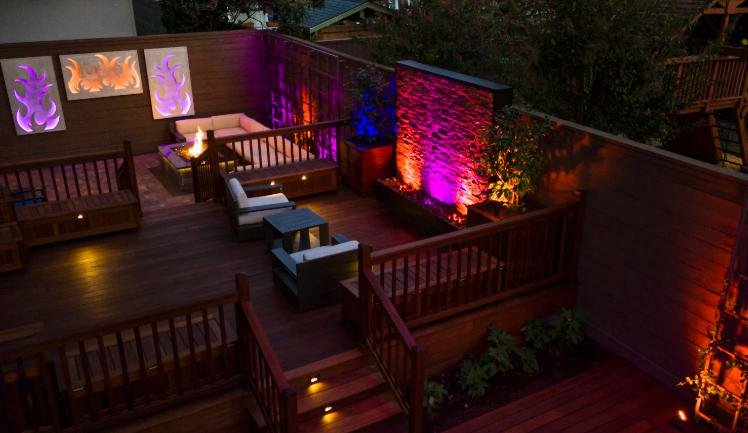
Strong lighting avoids flat, overly bright results. Designers layer light across different heights and intensities.
Layering Techniques
- Combine uplighting and downlighting
- Use soft path lights instead of floodlights
- Highlight textures with grazing techniques
- Maintain consistent color temperature
This layered strategy produces balance and sophistication. It enhances curb appeal while maintaining visual comfort.
In Katy, larger properties often benefit from subtle perimeter lighting combined with tree accents near the entry drive. That combination frames the home without overpowering the landscape.
Step 8: Maintenance and Long-Term Care
Professional systems require periodic care. Even durable fixtures need inspection.
Maintenance includes:
- Cleaning lenses
- Checking connections
- Repositioning fixtures after landscaping growth
- Testing timers and controls
Regular service keeps landscape lighting performing consistently through seasonal changes.
Enhancing Safety and Security
Thoughtful lighting reduces dark zones around entrances and walkways. It improves visibility without creating harsh shadows.
Homeowners feel more comfortable when:
- Entry steps remain well-lit
- Driveways receive even illumination
- Side yards avoid complete darkness
Balanced lighting increases confidence while preserving neighborhood aesthetics.
Illuminate Your Property with Powered By H
At Powered By H, we specialize in Houston landscape lighting services that transform ordinary yards into refined nighttime landscapes. We approach every landscape lighting design with intention, precision, and deep knowledge of Houston conditions.
Our team installs premium LED landscape lighting and handles every detail of outdoor lighting installation—from transformer sizing to final beam adjustments. We design with purpose. We install with precision. We deliver results that last.
Contact Powered By H today and let us bring your outdoor vision to life.