
Gulf Coast storms are a regular part of life in Houston, bringing heavy rain, strong winds, and power outages that can last for hours — sometimes days. Flooded streets and downed power lines often delay restoration, leaving families without essential electricity. That’s why more homeowners are planning ahead with reliable backup power solutions, including professional home generator installation.
Understanding generator options
Backup generators fall into two main types.
Portable generators are budget-friendly and flexible. The power select items with extension cords and require outdoor placement and fueling care.
Standby generators are fixed systems connected to your panel. They start automatically and run on natural gas or propane, supporting larger loads with less effort.
We size systems by listing essentials like refrigeration, HVAC components, sump pumps, and internet equipment. Proper sizing protects appliances and avoids overloads, a job best handled by a licensed electrician, Houston homeowners rely on.
Transfer switches and safe switching
A transfer switch separates your home from the utility grid during outages. This protects workers and your equipment. Manual switches pair with portable units. Automatic transfer switches work with standby generators and restore power without action from you. Correct installation and permits matter for safety and reliability.
Planning power for critical circuits
Start with a short needs list.
Life safety loads include medical devices and security systems.
Comfort loads include lights and fans.
Convenience loads include routers and workstations.
Mapping these to circuits helps the generator run efficiently and extends fuel use.
Natural gas offers long run times when lines remain active. Propane provides on-site storage and steady output. Gasoline suits portable units but needs safe storage. Fuel choice depends on availability and how long you plan to run during outages.
Installation, testing, and maintenance
Local codes guide clearances, grounding, and exhaust placement. Installation includes site review, wiring, and testing under load. Ongoing maintenance, such as oil changes, battery checks, and test runs, keeps systems ready for storm season.
Outdoor lighting during outages
Exterior lighting improves safety when power is out. With outdoor lighting installation in Houston, essential fixtures can stay powered to guide walkways and entrances. Thoughtful Houston landscape lighting services also reduce dark areas around the home while conserving generator capacity.
Choosing the right generator size for your home
One of the most common mistakes homeowners make is choosing a generator that is either too small or unnecessarily large. A unit that is undersized will struggle during peak demand and may shut down to protect itself. An oversized system costs more upfront and can run inefficiently. The goal is balance. We look at how your household actually uses power during an outage, not just what is plugged in on a normal day.
Start by thinking about storm conditions. During outages, most families are not running everything at once. Dishwashers, ovens, and pool equipment can usually stay off. What matters most are cooling systems, refrigeration, lighting, and communications. Homes with medical equipment or sump pumps need extra attention because these loads must stay reliable no matter what.
Load calculations factor in starting wattage as well as running wattage. Motors, compressors, and HVAC systems draw a surge of power when they start. Accounting for this prevents nuisance shutdowns and protects sensitive electronics. A professional assessment also considers future needs. If you plan to add an electric vehicle charger, home office equipment, or additional cooling, planning capacity now can save money later.
Generator sizing is not guesswork. It is a structured process that combines your priorities, your electrical panel layout, and local code requirements. With a clear plan, your generator will perform smoothly, use fuel efficiently, and support your household when storms test the grid again.
Reducing strain on your backup power system
Once a generator is installed, smart energy habits help it perform better during outages. The easiest way to reduce strain is to manage loads intentionally. Avoid starting multiple high-demand appliances at the same time. For example, let the air conditioner stabilize before switching on additional equipment. This simple sequencing reduces stress on the generator and extends its lifespan.
Energy-efficient lighting and appliances also make a difference. LED lighting uses far less power than older bulbs, which means more capacity for cooling and refrigeration. Many homeowners upgrade interior and exterior fixtures with this in mind, especially when planning storm readiness. Efficient appliances may cost more upfront, but they pay off during outages by lowering fuel use and runtime demands.
Thermostat management matters as well. Setting the cooling a few degrees higher during generator operation can dramatically reduce the load without sacrificing comfort. Ceiling fans help circulate air and allow cooling systems to work less. Keeping doors and blinds closed during the hottest part of the day also helps maintain indoor temperatures.
These habits are not about discomfort. They are about efficiency. By using power thoughtfully, your backup system runs more smoothly, fuel lasts longer, and wear on equipment is reduced. Over time, these small choices add up to better reliability and fewer service issues.
Storm season inspections and readiness checks
Backup power planning does not stop after installation. Storm season readiness starts with inspections. Before severe weather becomes frequent, schedule a system check to confirm everything is operating as designed. This includes testing the generator under load, verifying transfer switch operation, and inspecting wiring connections for corrosion or wear.
Battery health is especially important. Many generator failures during outages trace back to weak batteries that were never tested. Replacing a battery before it fails is far easier than discovering the issue during a storm. Oil levels, filters, and coolant also need attention, particularly for systems that have not run in several months.
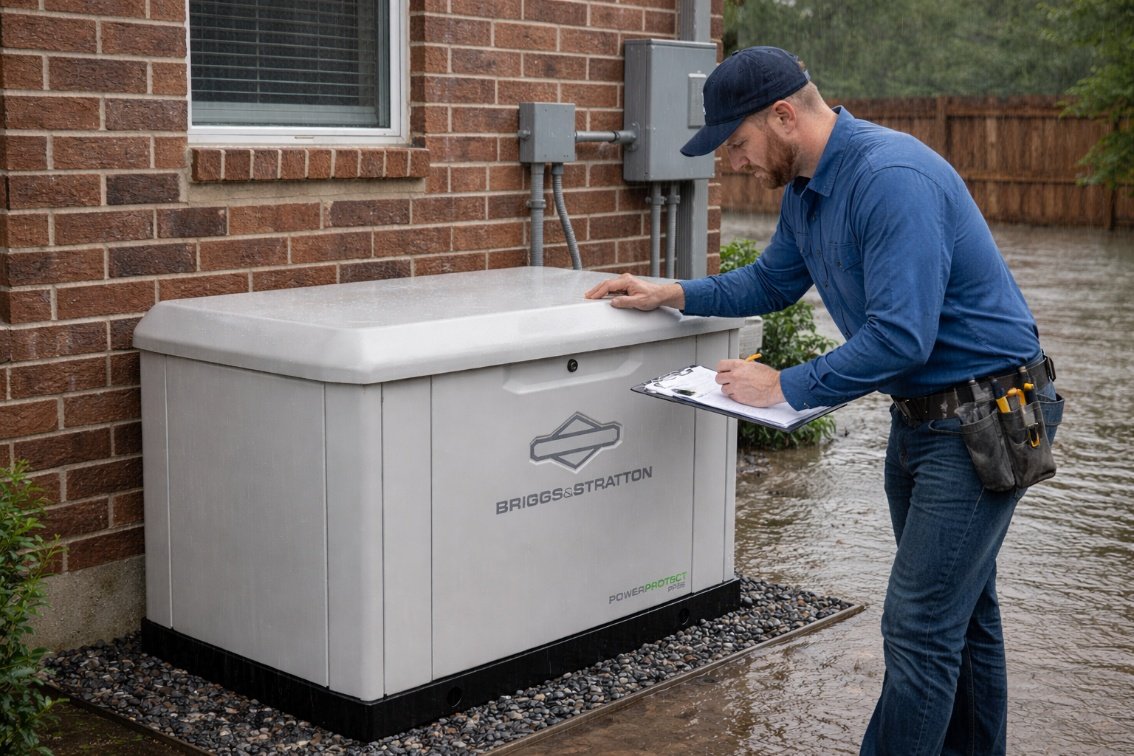
Clear the area around the generator as well. Remove debris, trim vegetation, and ensure exhaust paths remain unobstructed. Proper airflow prevents overheating and ensures safe operation. For homes in flood-prone areas, check elevation and drainage to keep equipment dry during heavy rain.
Readiness also includes your household. Make sure everyone knows what the generator powers and what it does not. Label backed up outlets and circuits clearly. Keep flashlights, extension cords for portable units, and maintenance records in an accessible place. When storms arrive, preparation reduces stress and helps your backup system perform exactly as intended.
Long-term value of backup power investments
Backup power is not just about emergencies. It adds long-term value to a home. Buyers in storm-prone regions often look for homes with reliable power solutions already in place. A professionally installed system signals that the home has been well cared for and thoughtfully upgraded.
Beyond resale value, backup power protects everyday investments. Refrigerated food, electronics, climate control systems, and work equipment all benefit from stable electricity. For remote workers, avoiding downtime can mean avoiding lost income. For families, it means maintaining routines even when the grid is unstable.
Over time, a well-maintained generator system proves its worth through reliability. Instead of scrambling for extension cords or fuel, power restores automatically. Instead of worrying about safety, lighting, and security systems remain active. That peace of mind is difficult to measure, but homeowners feel it every time storms roll through.
With smart planning, regular maintenance, and clear priorities, backup power becomes part of how a home supports the people inside it. It is not just about getting through outages. It is about confidence, comfort, and knowing your home is ready for whatever the weather brings.
Preparing for longer outages
During extended outages, prioritize cooling, refrigeration, and communication. Rotate loads if needed, monitor oil levels, and keep vents clear. Small checks prevent larger problems.
Backup power brings peace of mind. With smart planning, safe switching, and routine care, your system will be ready when storms arrive.
Powered by H supports storm-ready homes with home generator installation in Houston, licensed electrician in Houston, and emergency electrician in Houston services. Contact us